Representing space in the scientific revolution /
"The novel understanding of the physical world that characterized the scientific revolution depended on a fundamental shift in the way its protagonists understood and described space. At the beginning of the seventeenth century, spatial phenomena were described in relation to a presupposed cent...
| Main Author: | |
|---|---|
| Format: | Book |
| Language: | English |
| Published: |
Cambridge :
Cambridge University Press,
2014.
|
| Subjects: | |
| Online Access: | Cover image |
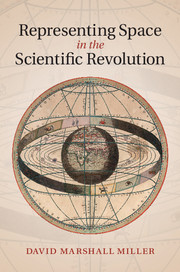
Table of Contents:
- Introduction: centers and orientations
- Pluribus ergo existentibus centris: explanations, descriptions, and Copernicus
- Non est motus omnino: Gilbert, verticity, and the law of the whole
- Respicere sinus: Kepler, oriented Space, and the ellipse
- Mille movimenti circolari: from Impetus to conserved curvilinear motion in Galileo
- Directions sont entre elles paralleles: Descartes and his critics on oriented space and the parallelogram rule
- Incline it to verge: Newton's spatial synthesis
- Conclusion: methodological morals.